
Introduction
Ever cooked chicken that looked perfectly golden on the outside, but turned out dry when you cut into it? I’ve run into this more times than I expected. For a long time, I thought I was doing something wrong with the recipe, but it turned out to be small cooking habits that made the difference.
Chicken, especially breast meat, cooks quickly and doesn’t have much fat to keep it moist. I used to leave it on the heat just a little longer to be safe, or cut into it too soon to check if it was done. That’s exactly what caused it to lose its juices.
Once I understood what was happening, the results improved immediately. Simple changes in how I cooked and handled chicken made it more tender and consistent. Learning basics like proper handling from this kitchen safety guide also helped me avoid common mistakes.
In this guide, you’ll learn:
- Why chicken turns dry even when it looks done
- Common mistakes that cause moisture loss
- Simple ways to keep chicken juicy every time
By the end, you’ll know how to cook chicken that stays tender and flavorful without guessing.
Navigations
Why Chicken Turns Dry (Quick Answer)
Chicken turns dry when it is overcooked or loses too much moisture, especially since it is a naturally lean meat with very little fat to keep it juicy.
The most common reason is cooking chicken longer than needed. Once it passes the safe internal temperature, the natural juices begin to evaporate quickly, leaving the meat firm and dry.
Other small mistakes can also contribute, such as using high heat, skipping marinades, or cutting into the chicken too soon after cooking.
- Overcooking beyond the ideal temperature
- High or uneven cooking heat
- Lack of moisture from oil, butter, or marinade
- Cutting chicken before it has rested
- Not brining or seasoning properly
Why Chicken Turns Dry When Cooking
For a long time, I could not figure out why my chicken kept turning dry. It would look perfectly cooked on the outside, but the moment I cut into it, the texture felt firm and lacked that juicy bite I was expecting.
What I eventually realized is that chicken dries out when it loses too much moisture during cooking. Since chicken, especially the breast, is naturally lean, it does not have enough fat to protect it. Even small mistakes with heat or timing can make a noticeable difference.
Once I understood how quickly chicken can go from perfectly cooked to overcooked, it became much easier to control the outcome.
Overcooking Chicken
This was my biggest mistake. I used to leave chicken on the heat a little longer just to be sure it was fully cooked. That extra time was exactly what caused it to dry out.
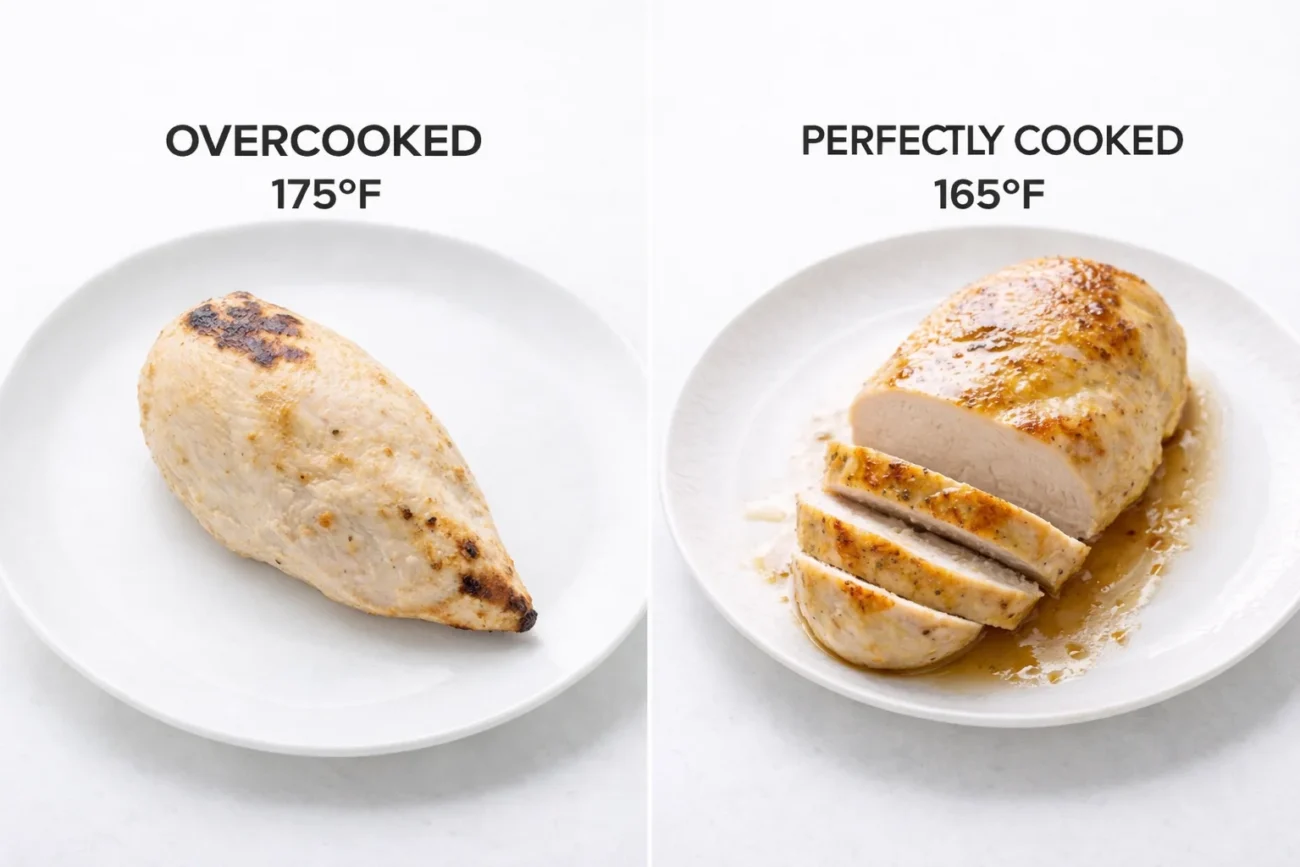
Chicken is safe at 165°F (74°C), but going beyond that removes moisture quickly. Learning about safe cooking temperatures helped me understand where I was going wrong.
Using a food thermometer for accurate cooking temperatures made a big difference. It removed the guesswork and helped me stop cooking at the right time.
Using High Heat
I used to cook chicken on high heat thinking it would save time. Instead, the outside would cook too fast while the inside was still not done, which meant I had to keep cooking it longer.
Switching to medium heat made the cooking more even and helped keep the chicken from drying out.
Not Using Enough Fat
Another thing I overlooked was how important fat is during cooking. When I cooked chicken without oil or marinade, it almost always turned out dry, especially with chicken breast.
Even a small amount of oil or a simple marinade helped keep the surface from drying and improved the overall texture.
Skipping Rest Time
I used to cut into the chicken right away to check if it was done. Most of the juices would run out onto the cutting board, and the meat would feel dry when I ate it.
Letting it rest for a few minutes made a noticeable difference. The juices stayed inside, and the texture improved immediately.
Cooking Lean Cuts the Wrong Way
I also learned that not all cuts cook the same. Chicken breast needs more attention because it is lean and cooks quickly, while thighs are much more forgiving.
Once I started adjusting how I cooked each cut, especially being more careful with chicken breast, my results became much more consistent.
How to Fix Dry Chicken Every Time
Once I understood why my chicken kept turning dry, fixing it became much simpler than I expected. It was not about changing recipes, but about paying attention to moisture, temperature, and timing.
These are the small adjustments that made the biggest difference for me. They are easy to follow and work even with basic home cooking.
Cook at the Right Temperature
This was the biggest change for me. I used to rely on guesswork and would leave the chicken on the heat a little longer just to be safe. That habit was the main reason it kept turning dry.
Cooking on medium or medium-high heat helped everything cook more evenly. High heat made the outside cook too fast, which only made me cook it longer.
I also learned that chicken is safe at 165°F (74°C), but removing it slightly earlier at around 160–162°F gives much better results. It finishes cooking while resting without drying out.
Using a cooking temperature guide helped me understand this better and made my results more consistent.
Use Brining or Marinades
I did not use to brine or marinate chicken often, but once I tried it, the difference was noticeable. The chicken stayed more moist and had better flavor throughout.
Even a simple marinade or a quick brine made the chicken more forgiving, especially when cooking chicken breast.
Cook with Moderate Heat
Slowing things down helped more than I expected. When I stopped rushing and used moderate heat, the chicken cooked more evenly and stayed juicier.
It also reduced the need to keep checking or overcooking, which was something I used to do a lot.
Add Moisture While Cooking
Cooking chicken without any fat or moisture was another mistake I used to make. Adding oil, butter, or even a simple sauce helped keep the surface from drying out.
Basting while cooking made it even better and gave the chicken a softer texture.
Let It Rest Before Cutting
I used to cut into the chicken right away to check if it was done. Most of the juices would run out, and the chicken felt dry when I ate it.
Letting it rest for a few minutes made a big difference. The juices stayed inside, and the texture improved without doing anything extra.
Choose the Right Cut
I also learned that chicken breast and thighs need to be treated differently. Breast cooks quickly and needs more attention, while thighs are much easier to work with.
When I started using thighs more often, especially when I wanted something simple, I noticed they stayed juicy even if I was not being as precise.
Common Mistakes That Make Chicken Dry
Most dry chicken problems come from small habits that are easy to overlook. I used to make many of these myself without realizing they were the reason my chicken never turned out the way I expected.
-
Overcooking the chicken
Leaving chicken on the heat too long removes moisture quickly and makes the texture tough. I used to keep cooking it “just to be safe,” but that extra time was exactly what made it dry. -
Using heat that is too high
The outside cooks too fast while the inside stays undercooked, which leads to cooking it longer than needed. I noticed this happened often when I tried to rush the process. -
Not using a food thermometer
Guessing doneness usually leads to overcooking. Once I started checking the internal temperature, the results became much more consistent. -
Skipping resting time
Cutting immediately causes the juices to escape. I used to slice right away, and most of the moisture ended up on the cutting board. -
Cooking without enough fat or marinade
Without moisture protection, the chicken surface dries out quickly. Adding even a little oil or marinade made a noticeable difference. -
Not adjusting for different cuts
Chicken breast cooks faster and needs more attention, while thighs are more forgiving. Treating them the same often leads to dry results. -
Uneven thickness
Thicker parts take longer to cook, which can dry out thinner areas. Pounding the chicken evenly helps it cook more consistently.
Pro Tips for Juicy Chicken Every Time
These small techniques can make a big difference in how your chicken turns out. Most of them are simple adjustments that improve both texture and consistency.
- Start with chicken thighs if you are a beginner. They contain more fat and are much more forgiving than chicken breast.
- Avoid overcrowding the pan. When too many pieces are cooked at once, the chicken steams instead of searing, which affects texture.
- Use foil when baking in the oven. Covering the chicken helps trap moisture and prevents it from drying out too quickly.
- Baste the chicken while cooking. Spoon juices, butter, or sauce over the top to keep the surface moist.
- Pound chicken to an even thickness. This helps it cook evenly and prevents thinner parts from drying out.
- Let the pan heat properly before adding chicken. A preheated pan helps create a better sear without overcooking.
- Do not flip too often. Letting the chicken cook undisturbed helps it retain moisture and develop better texture.
How to Fix Already Dry Chicken
If your chicken has already turned dry, it does not mean it is ruined. While you cannot fully undo overcooking, you can improve the texture and bring back some moisture with the right approach.
- Add moisture with sauces. Slice or shred the chicken and mix it with broth, gravy, or a creamy sauce to make it softer.
- Reheat gently with liquid. Add a small amount of water or broth, cover, and warm slowly so the chicken absorbs moisture.
- Use it in mixed dishes. Dry chicken works better in pasta, wraps, soups, or rice dishes where it can take in flavor.
- Brush with oil or butter before reheating. This helps improve texture and prevents further dryness.
- Cover while reheating. Using a lid or foil traps steam and helps soften the meat.
- Avoid high heat. Reheating slowly on low heat prevents the chicken from drying out even more.
Before and After: What Actually Changed
I used to think cooking chicken was just about following a recipe and making sure it was fully done. I would rely on how it looked, cut into it to check, and leave it on the heat a little longer just to be sure. Most of the time, it turned out dry, and I could not figure out why.
The shift happened when I stopped guessing and started paying attention to small details. Instead of focusing only on “is it cooked,” I started thinking about temperature, timing, and moisture.
I began using a thermometer, lowered the heat, and let the chicken rest before cutting. These were simple changes, but they completely changed the results.
Now, cooking chicken feels more controlled and consistent. It is no longer about luck or guessing. Once you understand the process, getting juicy, tender chicken becomes something you can repeat every time.
Quick Summary: How to Keep Chicken Juicy
- Cook chicken to the right internal temperature, not longer than needed
- Use medium or medium-high heat for even cooking
- Add moisture with oil, butter, or marinades
- Let chicken rest before cutting to keep juices inside
- Avoid overcrowding the pan to prevent steaming
- Use a food thermometer instead of guessing doneness
- Choose thighs for more forgiving, juicy results
Mistakes I Stopped Making That Changed My Chicken
Looking back, the biggest improvement did not come from learning new recipes. It came from stopping a few simple mistakes I did every time without thinking.
I stopped leaving chicken on the heat longer just to be safe. I stopped cutting into it right away to check if it was done. I also stopped using high heat for everything, thinking it would cook faster.
These were small habits, but they had a big impact. Once I became aware of them, it was much easier to control the outcome without overthinking the process.
After making these changes, I noticed that my chicken stayed more consistent. It was not perfect every time, but it was no longer dry and disappointing like before.
What I Noticed After Changing My Cooking Habits
One thing I realized over time is that dry chicken was not happening because I lacked skill. It was coming from small habits I did not even think about, like cooking a little longer or using high heat to save time.
When I started slowing down and paying attention to temperature and timing, the results changed almost immediately. The chicken looked the same on the outside, but the texture inside was completely different.
I also noticed that I did not need complicated techniques. Just using a thermometer, letting the chicken rest, and adding a bit of moisture while cooking made everything more consistent.
After a few tries, it stopped feeling like trial and error. It became something I could rely on, and that made cooking chicken much more enjoyable.
FAQs
Why does chicken turn dry even when it looks cooked?
Chicken can look fully cooked on the outside but still lose moisture inside if it is overcooked. This usually happens when it stays on the heat too long or cooks at high temperatures.
What is the best temperature to cook chicken?
Chicken should reach an internal temperature of 165°F (74°C). For better results, remove it from heat at around 160–162°F and let it rest so it stays juicy.
How do I keep chicken from drying out?
Use moderate heat, add moisture with oil or marinade, and avoid overcooking. Letting the chicken rest before cutting also helps keep the juices inside.
Is chicken breast more likely to dry out than thighs?
Yes. Chicken breast is lean and cooks quickly, so it dries out faster. Chicken thighs contain more fat and stay juicy even with longer cooking.
Can you fix dry chicken after cooking?
You can improve it by adding moisture. Slice or shred the chicken and mix it with sauce, broth, or use it in dishes like pasta or soups to restore texture.
Should I cover chicken while cooking?
Covering chicken, especially in the oven, helps trap moisture and prevents it from drying out.
Do I need a thermometer to cook chicken properly?
Using a food thermometer is the most reliable way to avoid overcooking and ensures accurate results every time.
Conclusion
For a long time, I thought dry chicken was just something you had to deal with. I would follow recipes, check it carefully, and still end up with chicken that looked good but felt dry when I ate it. It was frustrating, especially when everything else turned out fine.
What changed things for me was not a new recipe, but small adjustments. Paying attention to temperature, using a thermometer, and simply letting the chicken rest made a bigger difference than I expected. Once I understood how easy it is to overcook chicken, it became much easier to avoid it.
If you have been dealing with the same issue, it is not a skill problem. It usually comes down to a few habits that are easy to fix. Even one small change can noticeably improve your results.
Try applying one or two of these tips the next time you cook. With a little attention and consistency, you will start getting chicken that is tender, juicy, and reliable every time.

Krish Shrestha
I’m Krish Shrestha, the creator of Krivia Recipes. I share practical, ingredient-focused recipes made with simple ingredients and clear step-by-step instructions designed for real kitchens and everyday home cooking.
