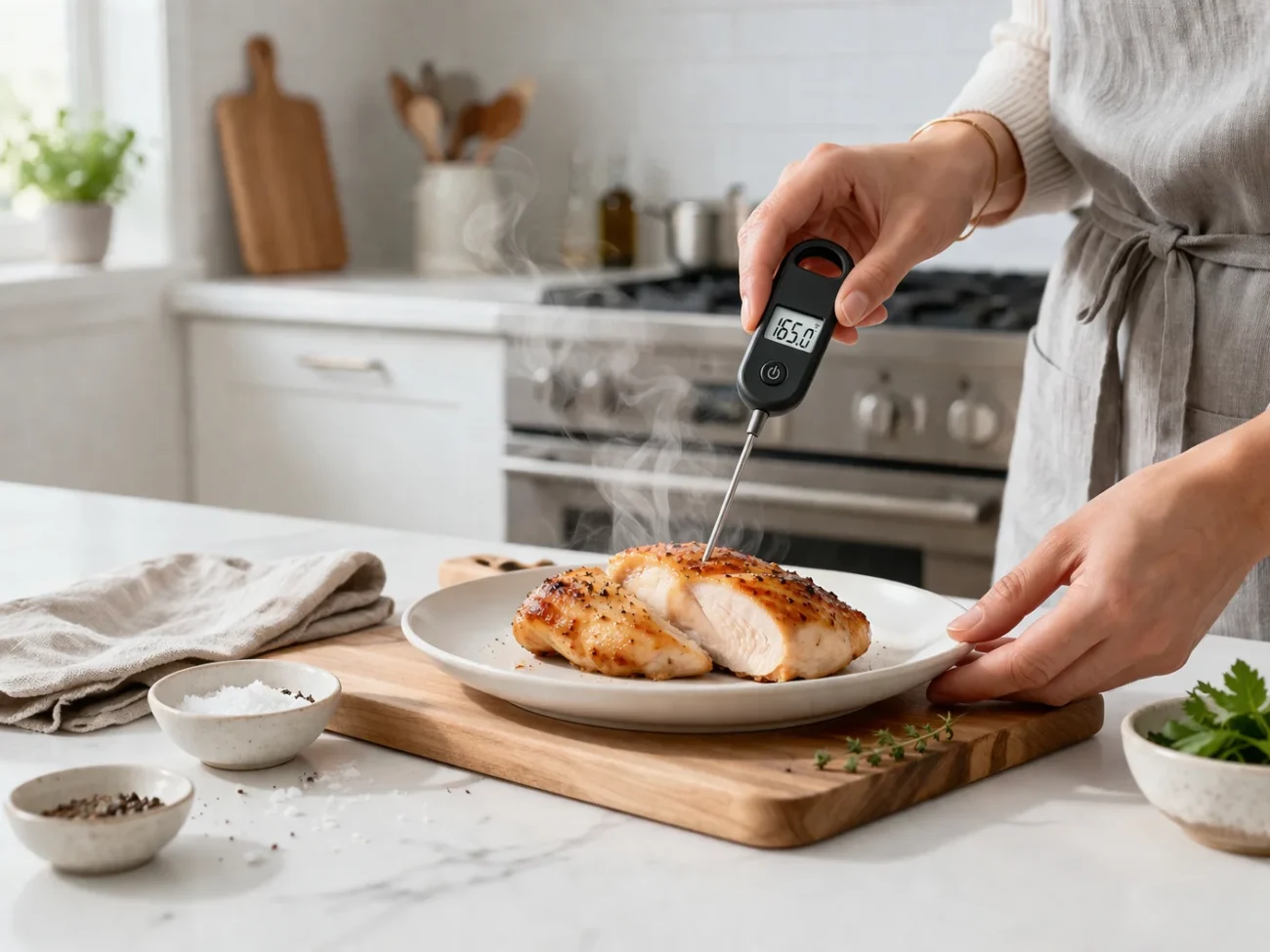
Introduction
Kitchen safety is often underestimated—until something small turns into a real problem. Leaving food out a little too long, rushing through preparation, or relying on guesswork instead of proper cooking methods can quietly increase the risk of injury or foodborne illness.
Most kitchen-related accidents don’t happen in professional settings. They happen at home, during everyday cooking. Burns, cuts, and cross contamination are more common than people expect, and they usually come from routine habits rather than lack of experience.
Food safety authorities like the USDA and FDA consistently emphasize three essential principles: proper food handling, accurate cooking temperatures, and consistent hygiene. When these are followed, the risk of avoidable mistakes drops significantly.
This guide brings everything together in a clear and practical way. You’ll learn how to reduce common risks, handle food safely, and build simple habits that make your kitchen a safer place to cook every day.
What You’ll Learn in This Guide
- Core kitchen safety principles that are easy to follow every day
- How to prevent burns, cuts, and common cooking accidents
- Safe food handling, storage, and cooking temperature basics
- Simple ways to avoid cross contamination in your kitchen
- Cleaning habits that help reduce health risks
Who This Guide Is For
This guide is designed for home cooks at any level. Whether you’re just starting out or already comfortable in the kitchen, these practices help you cook more safely without slowing you down. It’s especially useful if you want a kitchen that feels organized, controlled, and easy to manage.
Our Approach
This guide follows widely accepted food safety standards but focuses on practical application. Instead of theory, the goal is to help you build real habits you can use every time you cook.
Start with the basics, stay consistent, and kitchen safety becomes something you don’t have to think about.
Kitchen safety refers to the practices that prevent accidents and reduce the risk of foodborne illness while cooking. This includes proper food handling, maintaining hygiene, cooking at safe temperatures, and avoiding cross contamination. Following these principles helps create a safe and controlled cooking environment at home.
Food Safety Before Cooking
Safe cooking begins long before food reaches heat. Proper handling, storage, and preparation are essential to reduce the risk of contamination and ensure that ingredients remain safe to use.
Many food safety issues originate during this stage, particularly through improper storage or cross-contamination. Establishing good habits before cooking helps create a safer and more controlled kitchen environment. For a broader overview of safe practices, see our Essential Kitchen Safety .
The following steps help reduce risk and prepare ingredients safely before cooking begins.
- Store food at safe temperatures: Keep perishable items refrigerated below 40°F (4°C) and frozen foods at 0°F (-18°C). Avoid leaving food at room temperature for extended periods.
- Wash hands and surfaces thoroughly: Clean hands, utensils, and preparation surfaces before and after handling raw ingredients to prevent bacteria from spreading.
- Separate raw and ready-to-eat foods: Use different cutting boards and utensils for raw meat, poultry, and seafood to avoid cross-contamination.
- Check food quality and expiration dates: Discard items that show signs of spoilage or have passed their safe consumption period.
- Thaw food safely: Defrost frozen food in the refrigerator, cold water, or microwave—never at room temperature where bacteria can grow quickly.
Taking these precautions before cooking helps reduce contamination risks and ensures that food is handled safely from the very beginning of the preparation process.
Temperature Safety Guide
Cooking food to the right internal temperature is essential for both safety and flavor. Undercooked meat and seafood can carry harmful bacteria, while overcooking can ruin texture and taste. Using a food thermometer ensures accuracy and helps you serve perfectly cooked meals every time.
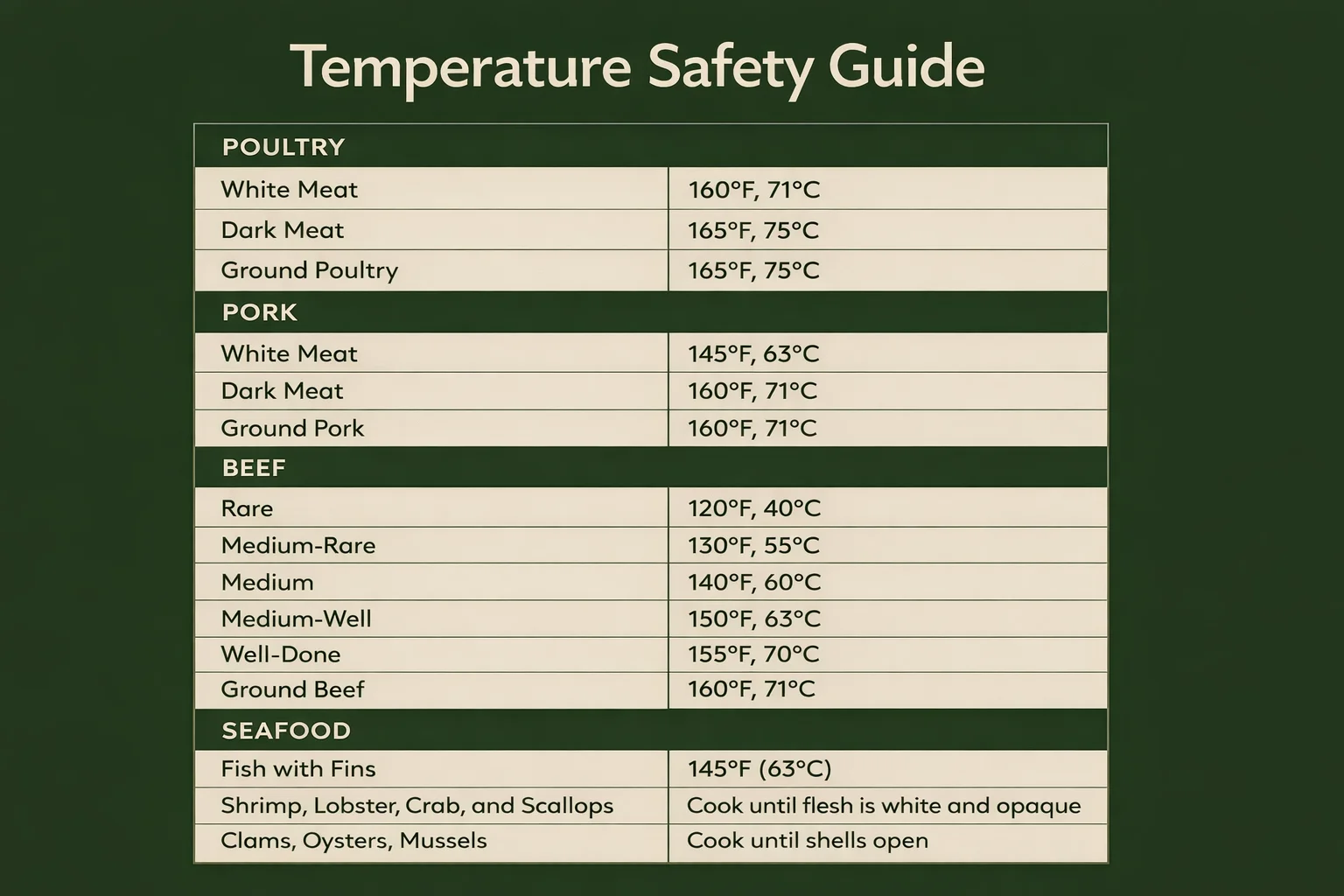
A quick reference chart for safe internal cooking temperatures across poultry, pork, beef, lamb, and seafood.
Always allow meat to rest after cooking, as temperatures can continue to rise slightly. For best results, insert the thermometer into the thickest part of the meat without touching bone. Following these temperature guidelines helps ensure your meals are safe, juicy, and delicious every time.
Quick Reference: Safe Cooking Temperatures
Use this quick guide for the most important minimum internal temperatures.
| Poultry (chicken, turkey) | 165°F (74°C) |
| Ground meat | 160°F (71°C) |
| Beef, pork (whole cuts) | 145°F (63°C) |
| Fish and seafood | 145°F (63°C) |
| Reheated leftovers | 165°F (74°C) |
These values represent minimum safe internal temperatures. Always use a food thermometer for accuracy.
Time and Temperature: How Food Safety Really Works
Safe cooking is not based on temperature alone. In many cases, food safety depends on a combination of time and temperature. Higher temperatures kill bacteria more quickly, while slightly lower temperatures can still be safe when maintained for a longer period.
This principle is widely used in professional kitchens and food safety guidelines. Understanding it helps explain why certain foods can be safely cooked at different temperature levels.
| Temperature | Time Required | Safety Effect |
|---|---|---|
| 165°F (74°C) | Instant | Rapidly kills harmful bacteria |
| 155°F (68°C) | ~15–20 seconds | Effective bacterial reduction with short hold time |
| 145°F (63°C) | ~3 minutes | Safe for whole cuts with proper rest time |
This is why rest time is important after cooking. Even when food is removed from heat, its internal temperature remains stable or continues to rise slightly, allowing bacteria to be destroyed during this period.
While lower-temperature cooking methods can be safe when carefully controlled, most home cooking should follow standard temperature guidelines for simplicity and reliability. Using a food thermometer ensures accuracy and helps maintain safe results.
Understanding Kitchen Danger Zones
Kitchen safety is not only about cooking food to the right temperature—it also depends on understanding where risks are most likely to occur. In any kitchen, certain areas consistently present higher chances of burns, contamination, and accidents. These are often referred to as “danger zones”, where heat, moisture, and food handling intersect.
The concept of a danger zone applies in two ways. First, there is the temperature danger zone—typically between 40°F and 140°F (4°C to 60°C)—where bacteria multiply rapidly. Second, there are physical danger zones within the kitchen itself, such as the stove, sink, and preparation surfaces, where most accidents and contamination events occur.
Recognizing these areas helps reduce risk by improving awareness and encouraging safer habits during everyday cooking tasks.
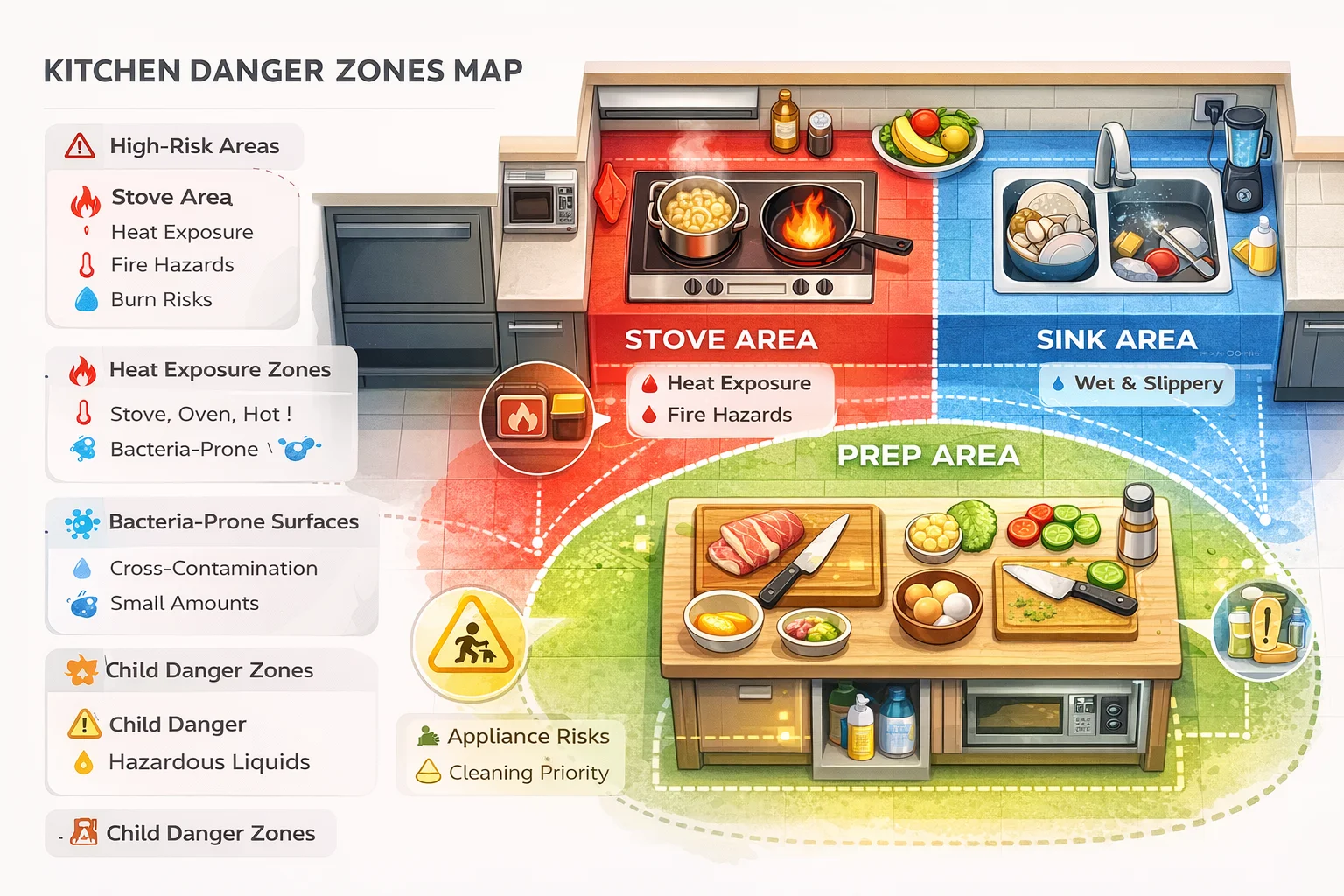
The image above illustrates how a typical kitchen can be divided into key zones based on risk. Each area presents different hazards that require specific attention and handling practices.
The stove area is the highest-risk zone due to direct heat exposure. Open flames, hot oil, and heated surfaces increase the likelihood of burns and fire-related incidents. Most kitchen fires originate here, often caused by unattended cooking or overheating oil.
The sink area, while not associated with heat, plays a major role in contamination risks. Moist environments allow bacteria to spread easily, especially when raw foods, dirty utensils, and clean items come into contact. Improper washing or cross-contamination in this zone can quickly compromise food safety.
The preparation area is where raw ingredients are handled, making it a critical point for bacterial transfer. Cutting boards, knives, and surfaces can carry pathogens from raw meat to ready-to-eat foods if not properly cleaned and separated.
In addition to these primary zones, other risk factors such as appliance placement, cleaning practices, and accessibility can influence overall safety. Cluttered spaces, improper storage, and lack of routine sanitation increase the likelihood of both accidents and contamination.
By understanding how these danger zones function and interact, it becomes easier to implement safer cooking habits, maintain hygiene, and reduce the risk of both foodborne illness and kitchen-related injuries.
Safe Cooking Temperature Guide
Cooking food to the right temperature is essential for both safety and flavor. Undercooked meat can contain harmful bacteria, while overcooking can ruin texture and taste. Use the interactive thermometer below to quickly understand safe cooking temperatures for different types of meat.
How to Use a Food Thermometer Correctly
A food thermometer is one of the most reliable tools for ensuring food safety. It helps you confirm that food has reached a safe internal temperature, reducing the risk of harmful bacteria such as Salmonella and E. coli.
Relying on appearance alone can be misleading. Meat may look fully cooked on the outside while remaining undercooked inside. Using a thermometer eliminates guesswork and provides accurate results every time.
To use a food thermometer correctly, insert it into the thickest part of the food without touching bone, fat, or the cooking surface. Wait a few seconds until the temperature reading stabilizes before checking the result.
- Insert the thermometer into the thickest part of the food
- Avoid touching bones or cooking surfaces
- Wait until the reading stabilizes before checking
- Clean the thermometer before and after each use
- Check multiple spots for larger cuts of meat
Using a food thermometer regularly helps ensure consistent cooking results and improves overall kitchen safety. It is especially important when cooking poultry, meat, seafood, and reheated leftovers.
Common Cooking Mistakes That Affect Food Safety
Even when following recipes carefully, small mistakes in food handling and cooking can increase the risk of foodborne illness. Many of these errors are not obvious and often come from relying on habits rather than proper safety practices.
Understanding these common mistakes helps reduce risk and ensures that food is not only properly cooked, but also safe to eat.
- Not using a food thermometer: Guessing doneness by time or appearance can lead to undercooked food. A thermometer is the only reliable way to confirm safe internal temperatures.
- Relying on color instead of temperature: Meat can appear fully cooked before reaching a safe temperature. For example, poultry may look done while still harboring harmful bacteria.
- Undercooking ground meat: Ground meats require higher temperatures because bacteria can be mixed throughout. Cooking burgers or minced meat below recommended levels increases risk.
- Improper reheating: Reheating food unevenly or to low temperatures allows bacteria to survive. All leftovers should be reheated thoroughly to safe levels.
- Cross-contamination during preparation: Using the same cutting boards, utensils, or surfaces for raw and cooked foods can transfer bacteria and contaminate otherwise safe meals.
Avoiding these mistakes, along with following proper temperature guidelines, significantly reduces the risk of contamination and helps maintain a safer kitchen environment.
Why Kitchen Safety Matters
Kitchen safety is not just about avoiding accidents—it’s about creating a space where you can cook with confidence and stay in control. When your kitchen is safe, everything feels more organized and easier to manage.
Many risks come from small everyday habits. Rushing, not paying attention, or skipping simple steps like cleaning and proper handling can quickly lead to mistakes.
Safety also improves how smoothly your cooking flows. A clean workspace and proper tool use help reduce burns, cuts, and contamination without slowing you down.
Over time, these small habits make a big difference. When safety becomes routine, it simply becomes how you cook.
Most kitchen accidents come down to a few common mistakes. Take a look at the breakdown below to see where the biggest risks are.
Kitchen Safety Risks
Sources: USDA Food Safety, CDC Kitchen Safety Guidelines, NFPA Home Cooking Safety Reports
As shown in the chart above, burns are the most common kitchen hazard, followed by cuts and other minor risks. These incidents often happen during routine tasks like handling hot cookware or using sharp tools without proper attention.
The good news is that most of these risks are preventable. By staying mindful, using the right techniques, and keeping your workspace organized, you can significantly reduce the chances of accidents and make your kitchen a safer place to cook.
Safe vs Unsafe Food Conditions
Understanding the difference between safe and unsafe food handling conditions helps prevent contamination and reduces the risk of foodborne illness.
| Condition | Safe | Risk Level | Explanation |
|---|---|---|---|
| Stored below 40°F (4°C) | Yes | Low | Cold temperatures slow bacterial growth, keeping food safe for longer periods. |
| Left at room temperature (1–2 hours) | No | High | Bacteria multiply rapidly in the danger zone, increasing the risk of contamination. |
| Cooked to proper internal temperature | Yes | Low | Proper cooking kills harmful bacteria and makes food safe to eat. |
| Undercooked meat or poultry | No | High | Undercooking allows harmful bacteria like Salmonella to survive. |
| Clean utensils and surfaces | Yes | Low | Regular cleaning reduces bacteria and prevents cross-contamination. |
| Cross-contamination (raw + cooked food) | No | High | Bacteria from raw foods can spread to ready-to-eat foods and cause illness. |
Food Safety Workflow: From Storage to Serving
Food safety follows a continuous process from storage to cleaning. Each stage presents different risks that must be managed properly.
| Step | What Happens | Main Risk | Safe Practice |
|---|---|---|---|
| Store | Food kept in fridge/freezer | Bacterial growth | Keep below 40°F (4°C) |
| Prepare | Cutting and handling food | Cross-contamination | Separate raw and cooked foods |
| Cook | Heating food | Undercooking | Use a thermometer |
| Serve | Food held before eating | Temperature drop | Keep above 140°F (60°C) |
| Clean | Washing utensils and surfaces | Bacteria spread | Sanitize properly |
Essential Kitchen Safety Rules
Once you understand where the risks come from, the next step is building simple habits that help you avoid them. Kitchen safety doesn’t rely on complex techniques—it comes down to consistency in how you handle food, tools, and your workspace.
Most accidents happen when basic steps are skipped. Working too quickly, losing focus, or ignoring cleanliness can lead to situations that are easily preventable with a few clear rules.
- Wash your hands before and after handling food
- Keep raw and cooked ingredients separate
- Use clean utensils and cutting boards
- Stay focused and avoid distractions while cooking
- Handle hot surfaces and sharp tools with care
- Keep your workspace clean and organized
These habits may seem simple, but they create a strong foundation for a safe kitchen. When followed consistently, they reduce risks and make cooking feel more controlled and efficient.
How to Prevent Kitchen Risks and Cooking Hazards
The kitchen is one of the most active areas in any home, but it also carries a higher risk of accidents than most spaces. From open flames and hot surfaces to sharp tools and electrical appliances, even routine cooking can quickly turn hazardous without proper attention. Preventing kitchen risks is not about avoiding cooking — it is about building safe habits that reduce the likelihood of injury or fire.
Most kitchen incidents are preventable. They often result from distraction, rushed preparation, or lack of awareness. A structured approach to safety helps maintain control, especially when working with heat, oil, and multiple cooking steps.
Stay Present While Cooking
Unattended cooking is the leading cause of kitchen fires. Even a short distraction can allow oil to overheat or food to burn. Always remain in the kitchen when using the stovetop, especially during high-heat cooking methods such as frying or searing. If you must step away, turn off the heat source.
Control Heat and Manage Flammable Materials
Heat management is critical. Keep paper towels, dishcloths, food packaging, and other flammable items away from burners. Avoid overheating oil, as it can ignite quickly. Using the correct temperature for each cooking method reduces both fire risk and food damage.
Use Equipment Safely and Maintain Your Kitchen
Faulty appliances and worn-out equipment increase the risk of electrical fires and injuries. Regularly inspect cords, plugs, and cooking tools. Replace damaged items immediately and avoid overloading electrical outlets. Clean grease buildup from stovetops and range hoods, as accumulated grease is highly flammable.
Practice Safe Handling of Hot Surfaces and Liquids
Burns are among the most common kitchen injuries. Turn pot handles inward to prevent accidental spills, and always use oven mitts or heat-resistant gloves when handling hot cookware. Be cautious when opening lids, as steam can cause instant burns.
Prepare for Emergencies
Even with precautions, emergencies can happen. Keep a lid nearby to smother small grease fires — never use water on them. A properly maintained fire extinguisher should be accessible in or near the kitchen. Knowing how to respond quickly can prevent a minor incident from becoming a serious hazard.
- Never leave cooking unattended
- Keep flammable items away from heat sources
- Avoid overheating oil or grease
- Maintain appliances and clean grease regularly
- Use proper protection for hot cookware
- Keep a lid or fire extinguisher within reach
Consistent attention and simple preventive habits significantly reduce kitchen risks. A safe kitchen environment not only protects your home but also allows you to cook with confidence and focus.
How to Prevent Fire and Heat Risks in the Kitchen
Preventing fire and heat-related risks in the kitchen starts with consistent attention and safe cooking habits. Most incidents occur when heat is not properly managed or when cooking is left unattended, allowing temperatures to rise quickly beyond control.
Keeping flammable materials away from heat sources is essential. Items such as paper towels, food packaging, and cloth can ignite easily when placed too close to burners. Managing oil temperature is equally important, as overheated oil is one of the most common causes of kitchen fires.
Safe handling of cookware and appliances reduces the risk of burns and accidents. Turning pot handles inward, using proper heat protection, and ensuring appliances are in good condition all contribute to a safer cooking environment.
- Never leave cooking unattended, especially at high temperatures
- Keep flammable items away from stovetops and ovens
- Avoid overheating oil or grease
- Turn pot handles inward to prevent spills
- Use oven mitts or heat-resistant gloves
- Regularly clean grease buildup from cooking surfaces
Being prepared for emergencies adds an extra layer of safety. Keeping a lid nearby to smother small flames and having a fire extinguisher within reach can help control situations quickly and prevent them from escalating.
Even with precautions, emergencies can happen. Knowing how to respond quickly can prevent serious damage.
🚨 Emergency: Act Fast If a Kitchen Fire Starts
Act immediately and stay calm. The right steps can stop a fire within seconds and prevent it from spreading.
- Turn off heat immediately if it is safe
- Cover flames with a lid or baking sheet
- Never use water on grease fires
- Use a fire extinguisher if needed
- Evacuate immediately if the fire spreads
Kitchen Fire Safety: Do vs Don’t
Simple habits can make a major difference in preventing kitchen fires and heat-related accidents. Understanding what to do—and what to avoid—helps you stay in control while cooking and reduces unnecessary risks.
| ✔ Do | ✘ Don’t |
|---|---|
| Stay in the kitchen while cooking, especially with high heat | Leave cooking unattended, even for a short time |
| Keep flammable items away from heat sources | Place towels, paper, or packaging near the stove |
| Use moderate heat and monitor oil temperature | Overheat oil or leave it unattended |
| Turn pot handles inward for safety | Leave handles sticking outward where they can be bumped |
| Keep a lid or extinguisher nearby for emergencies | Use water on grease fires |
| Clean grease buildup regularly | Ignore grease accumulation on stovetops and vents |
Following these simple do’s and avoiding common mistakes can significantly reduce the risk of fire and heat-related accidents in your kitchen.
Use this checklist regularly to build safe cooking habits.
Kitchen Fire Safety Checklist
Use this quick checklist to make sure your kitchen habits are safe and consistent. Small actions taken regularly can prevent most fire and heat-related accidents.
- Never leave cooking unattended
- Keep flammable items away from heat sources
- Avoid overheating oil or grease
- Turn pot handles inward while cooking
- Use oven mitts or heat protection
- Clean grease buildup regularly
- Keep a lid nearby to cover small flames
- Have a fire extinguisher accessible
- Check appliances and cords for safety
Reviewing this checklist regularly helps build safer cooking habits and reduces the risk of kitchen fires over time.
Understanding Kitchen Fire Risks
Understanding the leading causes of house fires is essential for improving home safety and preventing avoidable risks. Many incidents are not random—they are the result of common, repeated behaviors that can be controlled with better awareness.
Cooking remains the most significant contributor, accounting for nearly half of all house fires. This is followed by heating equipment and electrical issues, which often arise from improper usage, lack of maintenance, or unsafe environments.
The chart below highlights how different risk factors contribute to fire incidents. Recognizing these patterns makes it easier to focus on prevention and adopt safer habits in everyday cooking.
- Cooking is the leading cause of house fires
- Heating equipment is the second most common risk
- Electrical faults contribute to a significant number of incidents
- Most causes are preventable with simple safety habits
By understanding where risks originate, you can take practical steps to reduce hazards and create a safer kitchen environment.
Fire and Heat Safety in the Kitchen
Heat is one of the most common sources of kitchen accidents. From stovetops to ovens, even routine cooking can become risky if proper attention is not maintained. Burns and fire hazards often happen quickly, especially when cooking is left unattended.
A large number of kitchen fires start when heat is not controlled properly. Oil overheating, flammable items placed near the stove, or distractions while cooking can all increase the risk. These situations are preventable with simple awareness and better habits.
Staying present while cooking is one of the most important safety practices. Avoid leaving food unattended on the stove, and always keep an eye on high-heat cooking methods such as frying or boiling.
- Never leave cooking unattended, especially when using high heat
- Keep flammable items away from the stovetop
- Turn pot handles inward to prevent accidental spills
- Use oven mitts or heat protection when handling hot cookware
- Keep a lid nearby to quickly cover small flames if needed
Developing awareness around heat and fire makes a significant difference. With consistent attention and simple precautions, you can reduce the risk of burns and prevent most kitchen-related fire hazards.
The chart below breaks down the most common causes of house fires, helping you understand where the biggest risks come from.
Leading Causes of House Fires
Using a Fire Extinguisher in the Kitchen
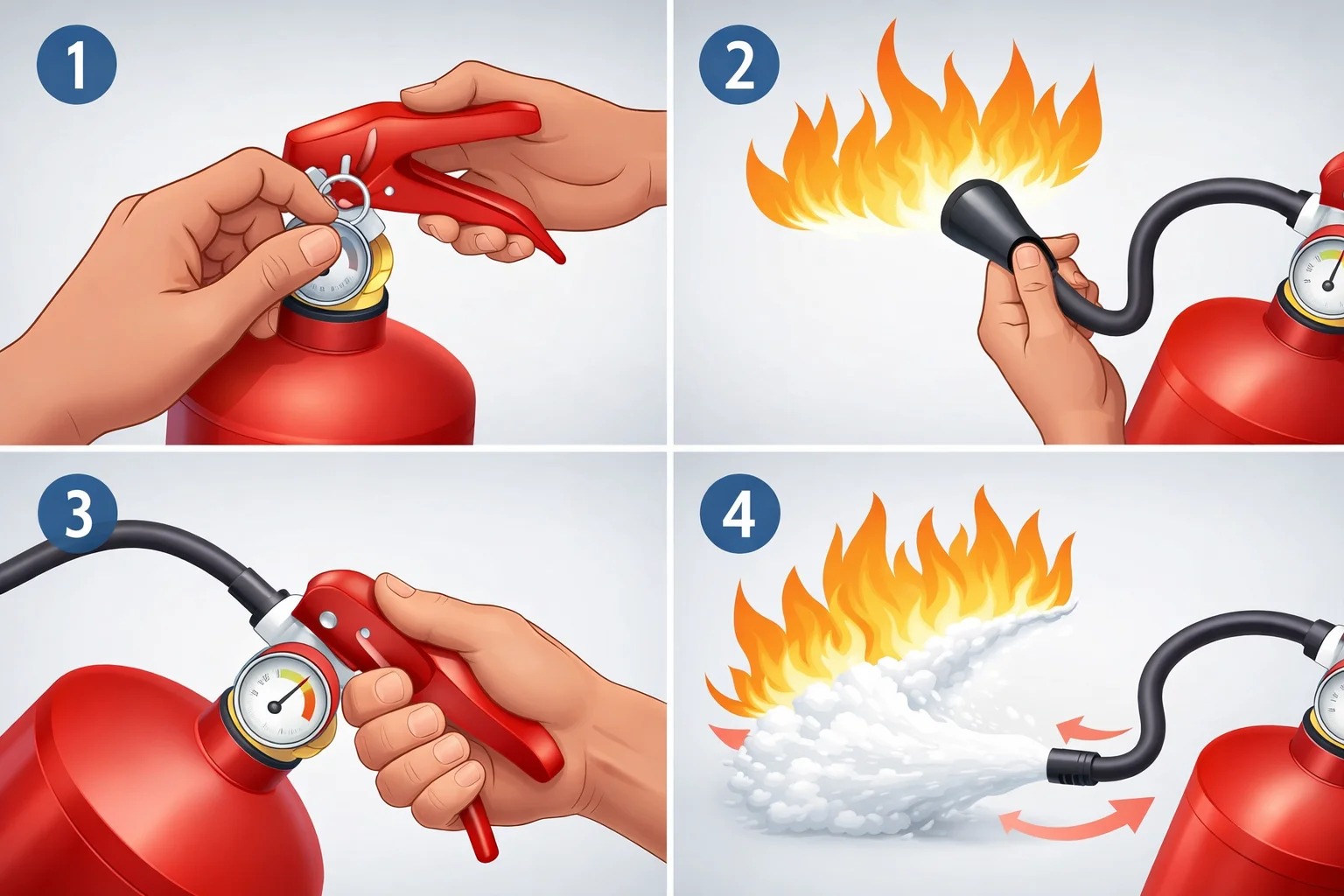
A fire extinguisher is one of the most effective tools for controlling small kitchen fires, but it must be used correctly to be effective. The image above demonstrates the PASS method, a simple and widely recommended approach that helps guide your actions during an emergency. Acting quickly while following the correct steps can prevent a small fire from spreading and causing serious damage.
In most homes, a multipurpose ABC fire extinguisher is suitable for kitchen use, as it can handle grease, electrical, and general fires. In kitchens where high-temperature oils are used frequently, such as commercial settings, a Class K extinguisher is specifically designed to safely control grease fires. Choosing the right type ensures that the extinguisher works effectively when needed.
- Pull the pin to unlock the extinguisher
- Aim at the base of the fire, not the flames
- Squeeze the handle to release the extinguishing agent
- Sweep from side to side until the fire is out
This method allows you to target the source of the fire rather than the visible flames, which is essential for fully extinguishing it. Always maintain a safe distance while using the extinguisher and continue monitoring the area afterward to ensure the fire does not reignite.
A fire extinguisher should only be used for small, contained fires. If the fire spreads, produces heavy smoke, or becomes difficult to control, evacuate immediately and contact emergency services. Knowing when to act and when to leave is just as important as knowing how to use the extinguisher.
The chart above illustrates the primary causes of house fires, showing how common everyday activities contribute to fire incidents. Cooking stands out as the leading cause, accounting for nearly half of all cases, which highlights the importance of staying attentive in the kitchen. Heating equipment follows as the second major contributor, especially during colder months when prolonged usage increases risk.
Electrical issues and intentional causes also represent a notable portion, indicating the need for proper maintenance and awareness. Smaller contributors such as smoking, dryer or washer usage, exposure to other fires, and candles may seem less significant individually, but together they still form an important share of total incidents.
- Cooking remains the highest risk factor and requires constant supervision
- Heating systems should be regularly inspected and used safely
- Electrical faults can be reduced through proper wiring and maintenance
- Even smaller sources like candles and appliances should not be overlooked
Overall, the data emphasizes that most house fires are preventable. By focusing on high-risk areas and adopting simple safety practices, households can significantly reduce the chances of fire-related accidents and create a safer living environment.
Understanding Kitchen Safety Through Data
In everyday cooking, most safety risks are not immediately visible. They develop gradually through small actions that often go unnoticed. Leaving food out for a little too long, skipping a quick clean, or not paying attention to temperature may seem minor in the moment, but these habits can slowly increase the chance of contamination and accidents. Over time, these risks build up and can affect both food quality and personal safety.
This is where visual data becomes useful. Instead of relying on guesswork, it helps reveal clear patterns that show how different factors influence safety in the kitchen. By looking at changes in time, temperature, hygiene, and behavior, it becomes easier to understand how risk develops and how it can be controlled. The following graphs present these patterns in a simple way, making it easier to see how everyday actions can either increase or reduce risk in the kitchen.
Bacteria Growth
Food Spoilage
Temperature vs Growth
Cleaning Effect
Kitchen Accidents
Sources: USDA Food Safety CDC Kitchen Safety Guidelines NFPA Home Cooking Safety Reports
Kitchen Safety Process
What These Graphs Reveal
These graphs provide a clearer understanding of how risk develops in the kitchen over time and why small actions have a greater impact than they may seem. They show that kitchen safety is not just about single mistakes, but about how conditions change and build gradually.
The bacteria growth graph highlights how quickly risk can increase under the right conditions. Bacteria does not grow at a steady pace—it accelerates rapidly once temperature and time allow it. This means even short delays in storing or refrigerating food can lead to a much higher level of risk than expected.
The spoilage graph explains why food safety cannot always be judged by appearance. Freshness declines gradually, not all at once, which makes it difficult to rely on smell or visual signs alone. Food may still seem acceptable while already becoming unsafe, reinforcing the importance of proper timing and storage.
The temperature graph shows how strongly heat influences bacterial activity. As temperature rises, bacteria grow faster and spread more easily. This is why keeping food out of unsafe temperature ranges is essential, especially when it is left out for extended periods.
The cleaning graph presents a more practical perspective. Regular cleaning reduces the amount of bacteria present on surfaces and tools. Simple actions such as wiping surfaces, washing hands, and cleaning utensils can significantly lower contamination risk over time.
The accidents graph highlights how safety improves with better habits and experience. As awareness increases, mistakes become less frequent, showing that consistency plays a key role in reducing everyday kitchen risks.
Taken together, these insights show that kitchen safety is not controlled by a single factor. It is shaped by time, temperature, hygiene, and daily habits working together. Paying attention to these details creates a safer, more controlled cooking environment.
How to Apply These Safety Insights in Your Kitchen
Understanding kitchen risks is only the first step. What truly makes a difference is how these insights are applied in everyday cooking habits. Small actions, when repeated consistently, can either increase risk or significantly reduce it over time.
Maintaining proper food temperature is one of the most important factors in preventing bacterial growth. Keeping food out of unsafe temperature ranges and ensuring it is cooked thoroughly helps eliminate harmful microorganisms before they can spread. Even short delays in refrigeration can gradually increase risk.
Cleanliness also plays a critical role in kitchen safety. Regularly cleaning surfaces, utensils, and hands reduces the buildup and transfer of bacteria. Without consistent cleaning, contamination can spread easily between foods, especially when handling raw and ready-to-eat items.
Attention during cooking is equally important. Many kitchen risks occur when food is left unattended or when heat is not properly controlled. Staying present and managing temperature carefully helps prevent both food safety issues and fire hazards.
- Keep food out of the temperature danger zone (40°F–140°F)
- Cook food to safe internal temperatures
- Clean surfaces and utensils regularly
- Avoid cross-contamination between raw and cooked foods
- Stay attentive while cooking, especially with high heat
By combining proper temperature control, cleanliness, and attentiveness, kitchen safety becomes a consistent habit rather than a one-time effort. Over time, these practices create a safer and more controlled cooking environment.
Key Takeaways
Kitchen safety is not controlled by a single action, but by consistent habits built over time. Small decisions made during cooking, storage, and cleaning can either reduce risk or allow it to grow gradually.
Temperature control plays a major role in preventing foodborne illness. Keeping food out of the danger zone and cooking it properly ensures that harmful bacteria do not have the opportunity to multiply.
Cleanliness is equally important. Regularly washing hands, surfaces, and utensils helps prevent contamination and limits the spread of bacteria between different foods and kitchen tools.
Attention and awareness during cooking can prevent both food safety issues and kitchen accidents. Many risks occur when cooking is rushed, unattended, or not properly monitored.
- Keep food out of the temperature danger zone (40°F–140°F)
- Cook food to safe internal temperatures
- Maintain clean surfaces and utensils
- Avoid cross-contamination between raw and cooked foods
- Stay attentive while cooking
By following these core practices consistently, you can significantly reduce risks and create a safer, more reliable kitchen environment.
Kitchen Safety FAQs
What is the most important kitchen safety rule?
The most important kitchen safety rule is staying attentive while cooking. Many accidents happen when food is left unattended or heat is not properly managed. Staying present helps prevent both food safety issues and fire hazards.
Why should you use separate cutting boards?
Using separate cutting boards prevents cross-contamination between raw and ready-to-eat foods. Bacteria from raw meat can easily transfer to other foods if surfaces are not properly separated and cleaned.
How can I prevent burns while cooking?
Burns can be prevented by using oven mitts, keeping pot handles turned inward, and handling hot cookware carefully. Avoid rushing and always be aware of hot surfaces and steam.
What temperature should chicken be cooked to?
Chicken should be cooked to an internal temperature of 165°F (75°C). Using a food thermometer ensures that harmful bacteria are destroyed and the food is safe to eat.
What is the temperature danger zone?
The temperature danger zone is between 40°F (4°C) and 140°F (60°C), where bacteria grow rapidly. Keeping food out of this range is essential for preventing contamination and foodborne illness.
How can I keep my kitchen workspace safe and organized?
A safe kitchen workspace requires regular cleaning, proper storage, and minimal clutter. Keeping surfaces dry, organizing tools, and cleaning spills immediately helps reduce accidents and improves overall safety.
What are the most common kitchen accidents?
Common kitchen accidents include burns, cuts, slips, and fires. These are often caused by inattention, improper handling of equipment, or unsafe cooking conditions.
Final Thoughts on Kitchen Safety
Kitchen safety is built on awareness, consistency, and simple everyday habits. From managing food temperatures to maintaining cleanliness and staying attentive while cooking, each step plays a role in reducing risks and preventing accidents.
Many common kitchen hazards develop gradually, often going unnoticed until they lead to larger issues. By understanding how these risks occur and applying practical safety measures, you can create a more controlled and reliable cooking environment.
With the right knowledge and consistent practices, kitchen safety becomes second nature. Over time, these habits not only protect your health but also make cooking more confident, efficient, and enjoyable.

Krish Shrestha
I’m Krish Shrestha, the creator of Krivia Recipes. I share practical, ingredient-focused recipes made with simple ingredients and clear step-by-step instructions designed for real kitchens and everyday home cooking.
